
The Manor
one house, several lives
A country house, then an art hotel. The building has changed lives without changing its bearing.
What the archives do not say
We know neither the name of the first owner nor the exact year the first stone was laid. We would rather say so than invent it.
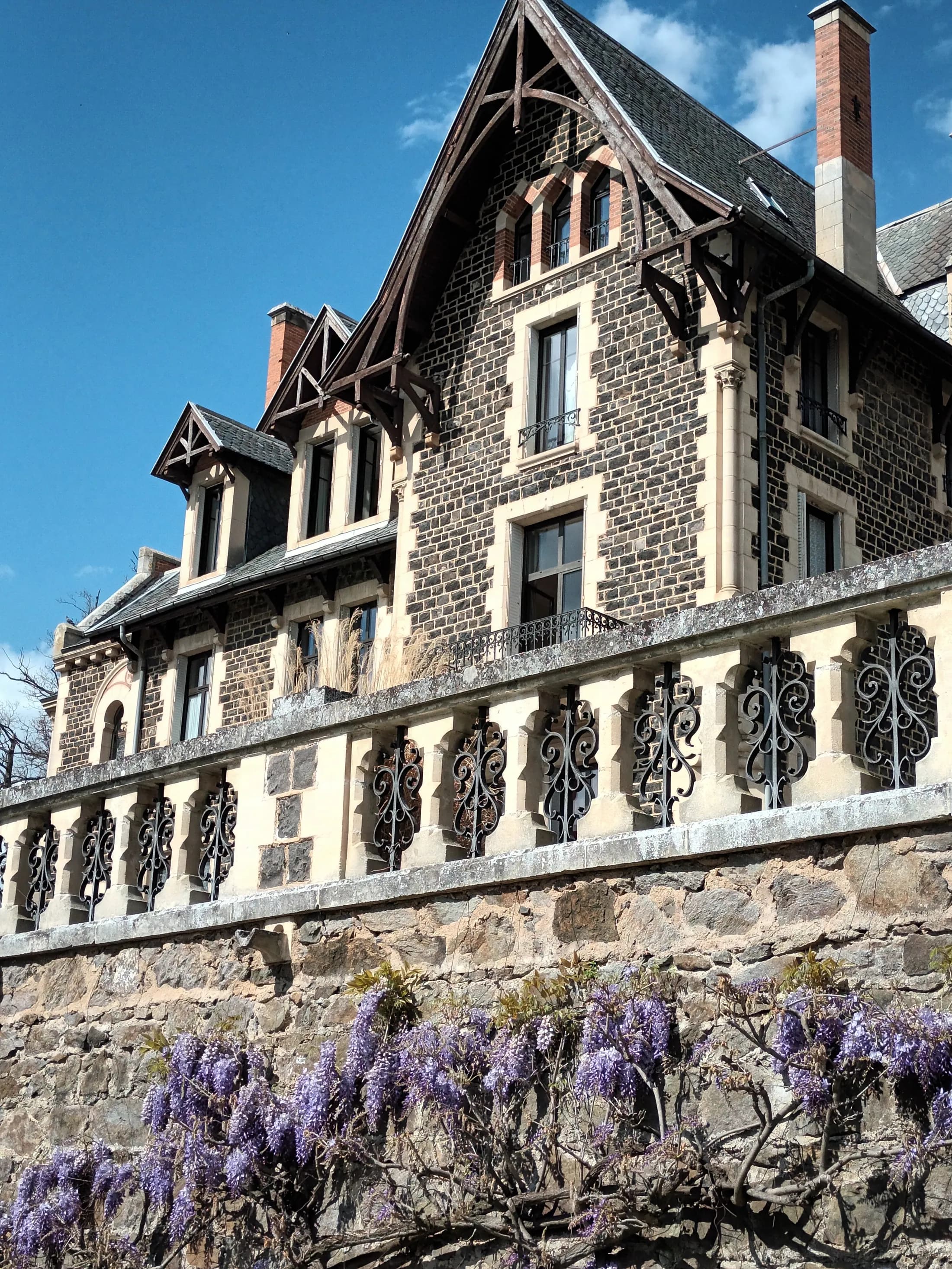
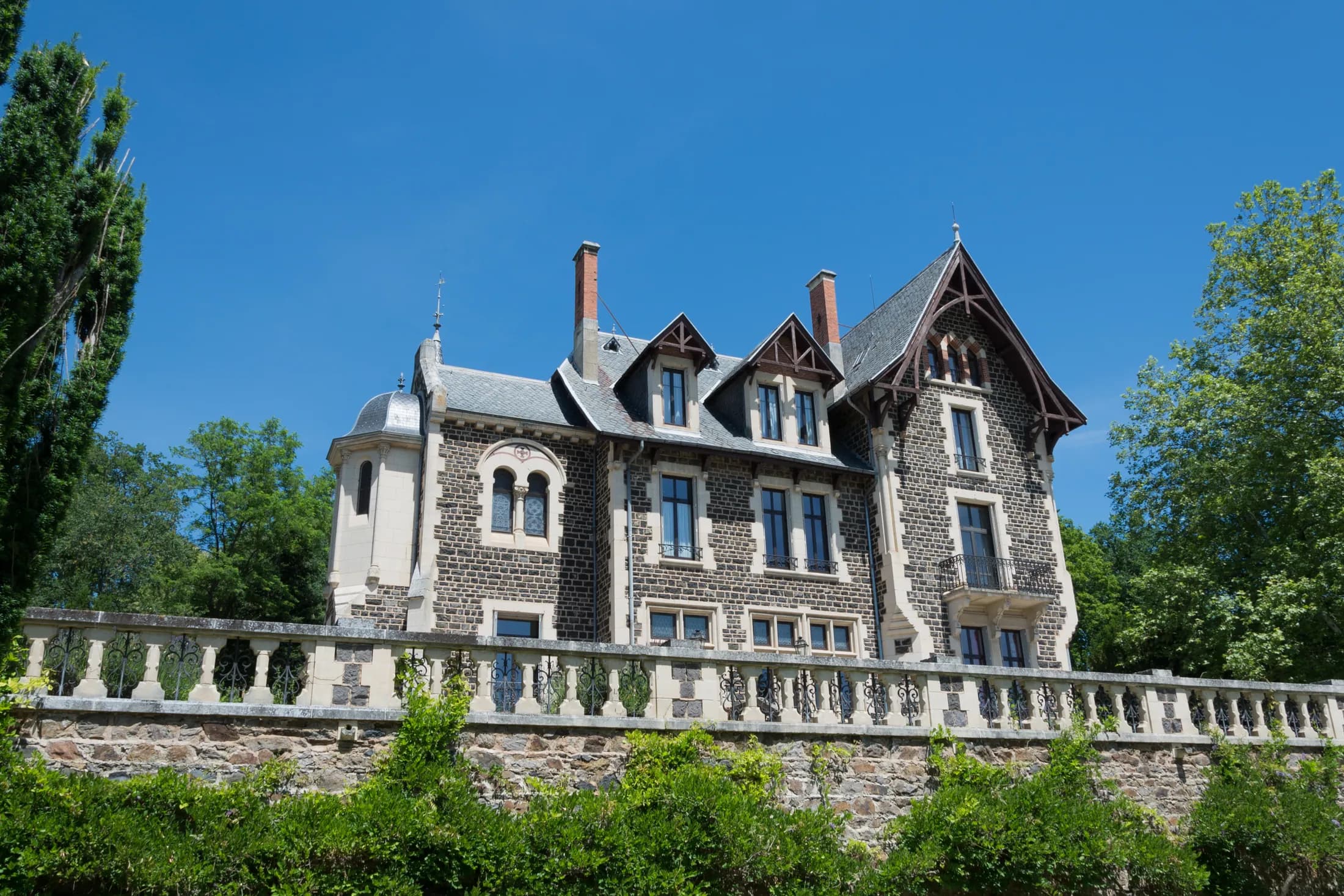
What the house says of itself is surer. It was built in the nineteenth century as a country residence, the kind the comfortable bourgeoisie of the region had built when it wanted to breathe away from town. You recognise them by their poise, by the way they stand square in the middle of their own ground, without trying to imitate a château.
This one was never a château. It is a house, writ large.
Local stone, and tall windows
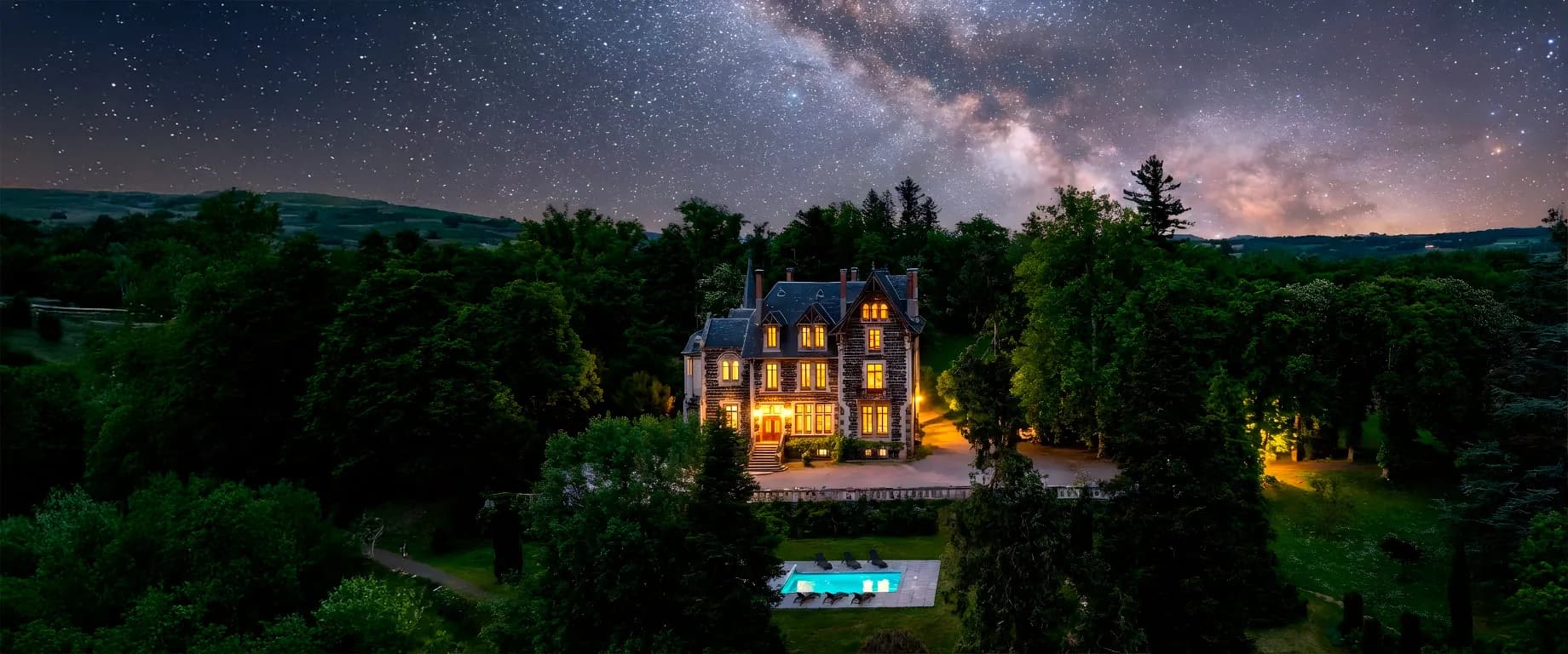
It is built of local stone, quarried a few kilometres away because bringing any from further would have made no sense. The openings are tall and wide: letting light in was expensive then, and that was precisely the point.
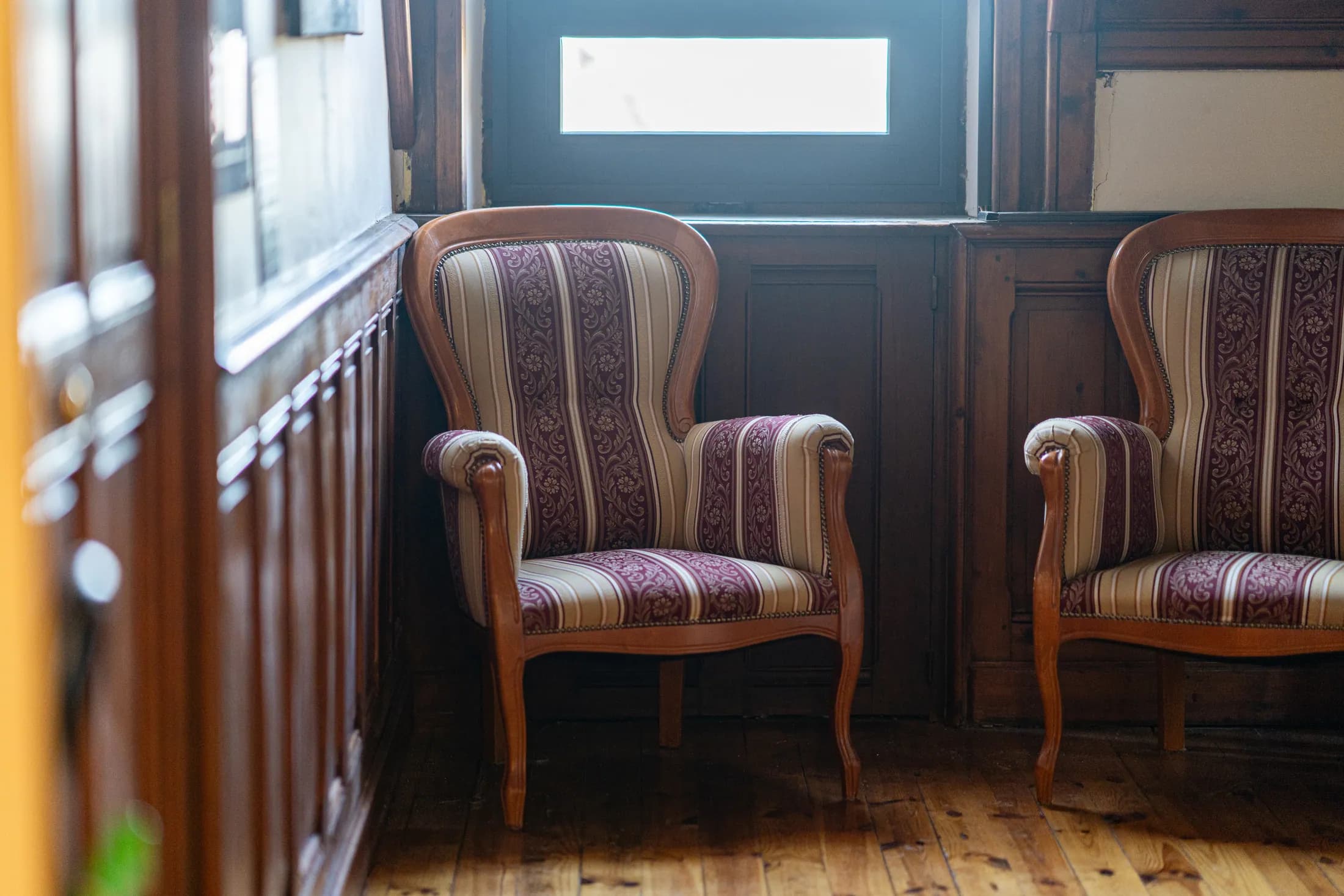
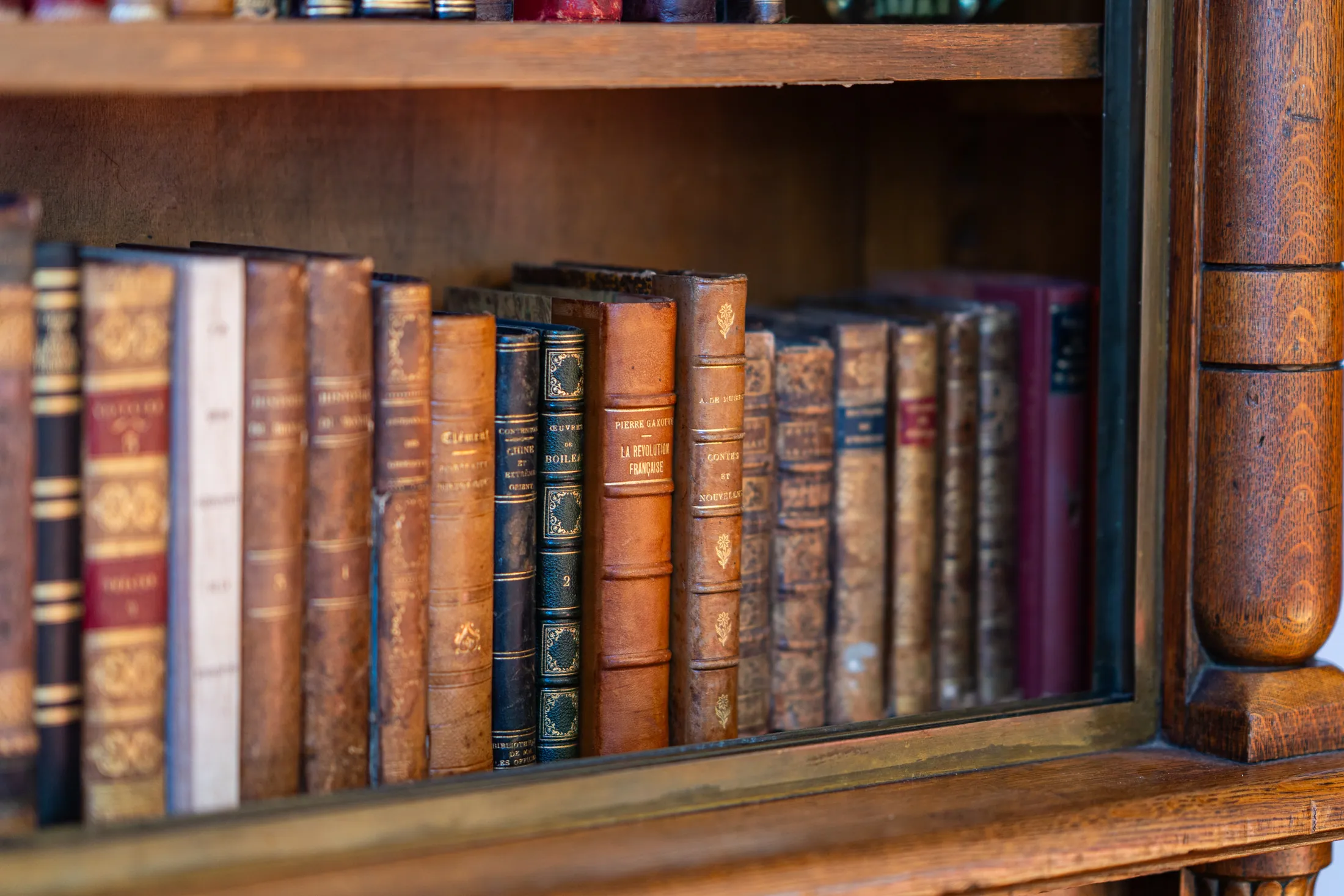
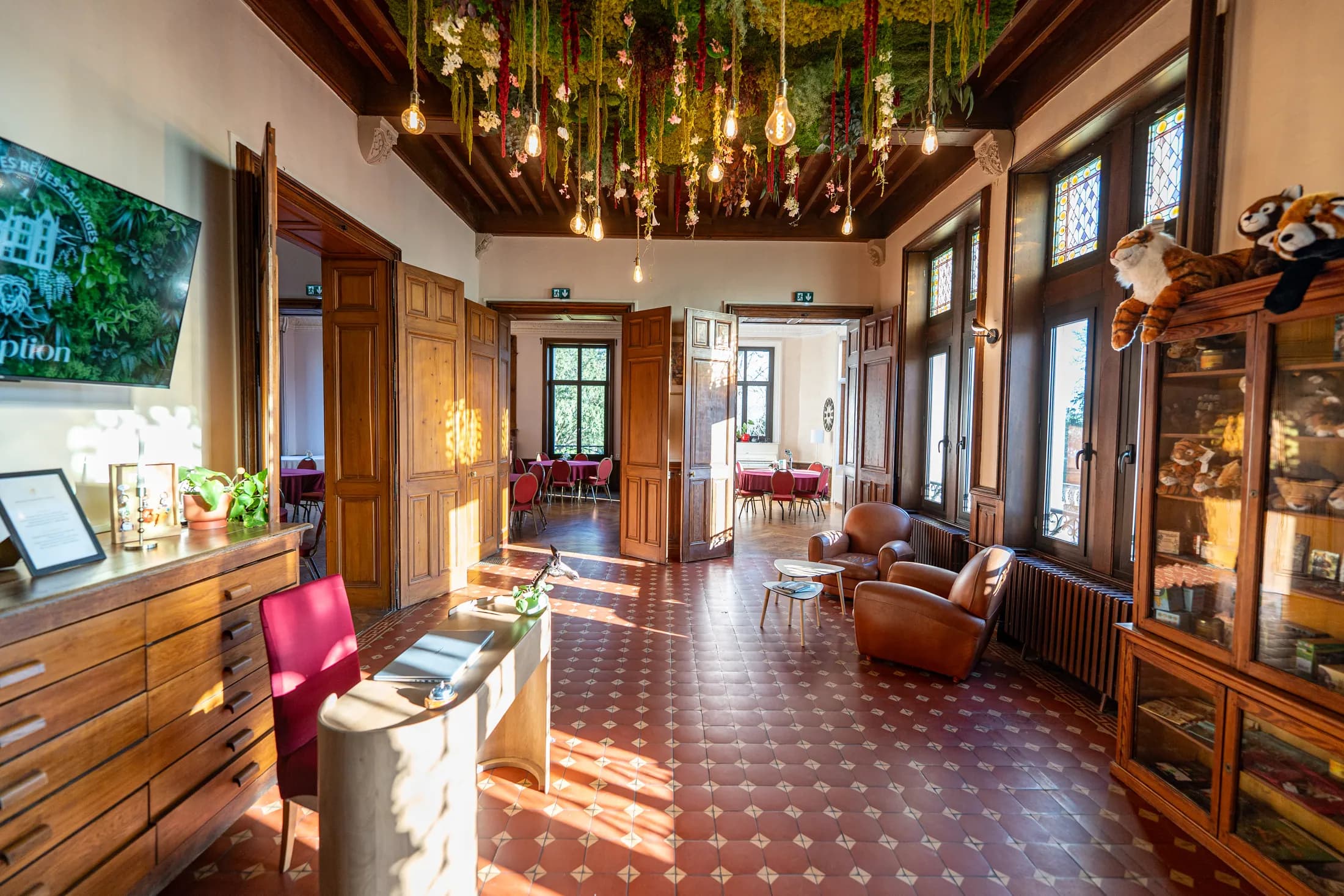
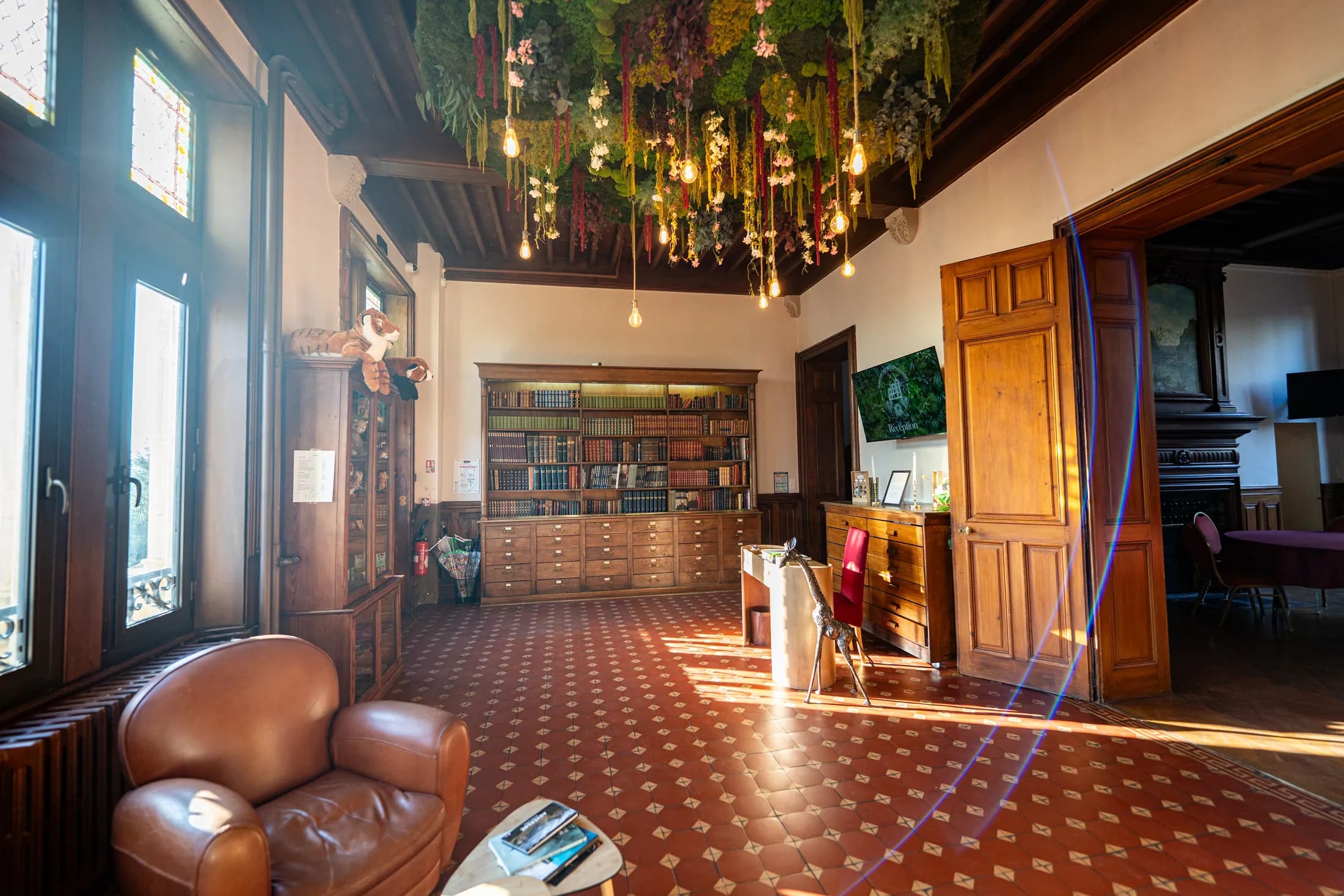
Inside, the ceilings keep their distance. The woodwork, the mouldings and the original proportions were kept through the restoration, not out of nostalgia but because nobody would build them that way today.
Then the walls came alive
Nothing was knocked through. The nine rooms are the original rooms, with their proportions and their windows. It is the walls that changed.
Sandrot and Mia Terra painted animals there at the scale of the room, not of the canvas. Their creatures work around a moulding, stop at a skirting board, follow the angle of a wall: they worked with the house, not against it. You do not sleep in front of a work here. You sleep inside one.
One more room
The chapel is still there
There is a chapel in the house. It was never the village church: in all likelihood it was the owner’s private chapel. Houses of this standing often had one, less out of devotion than because it came with the position.
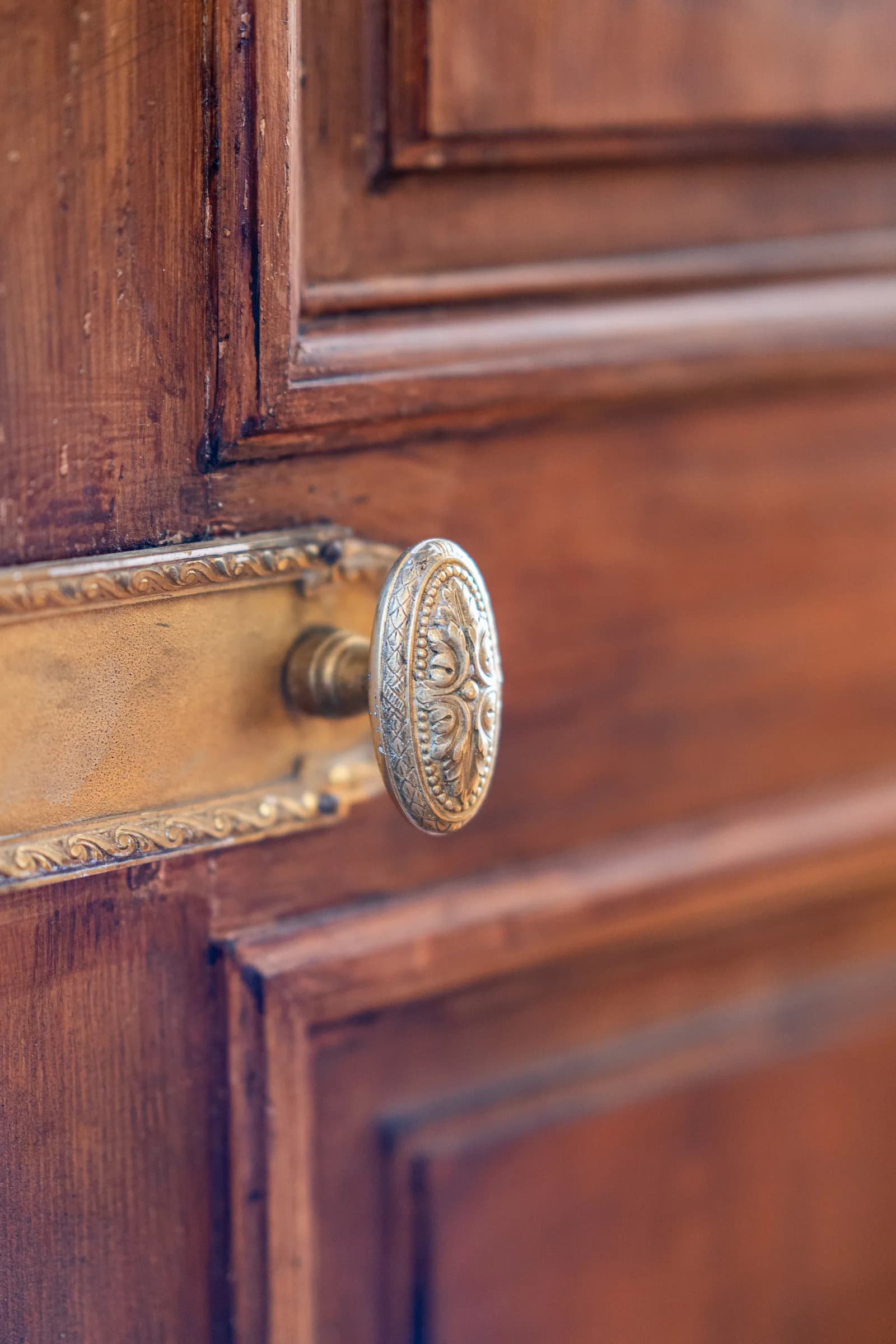
We know neither who came to it nor what was asked there. It has stayed, with its door and its brass handle. So have the stained-glass windows in the hall, which break the light into coloured diamonds before it reaches the tiles.
And today
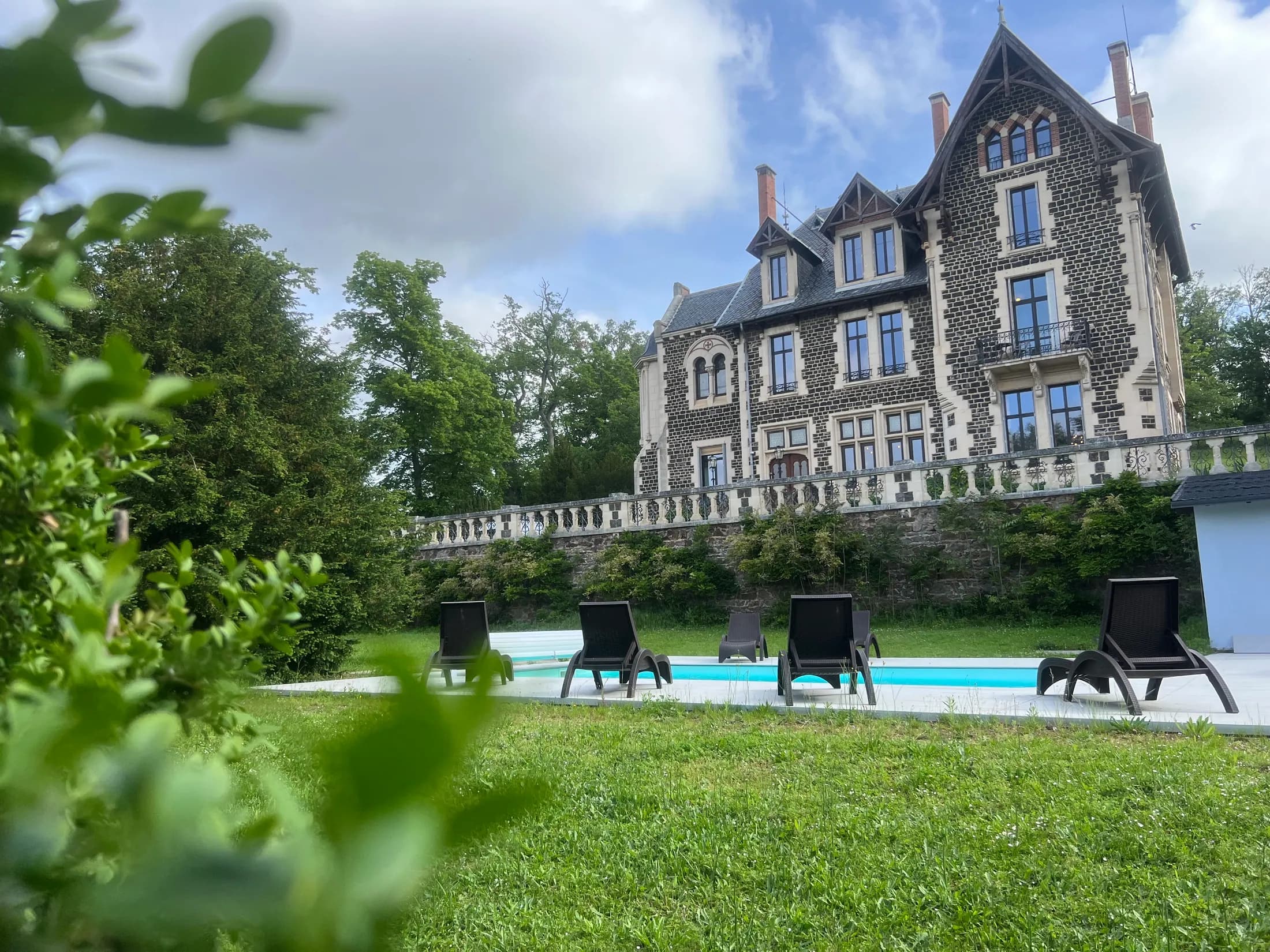
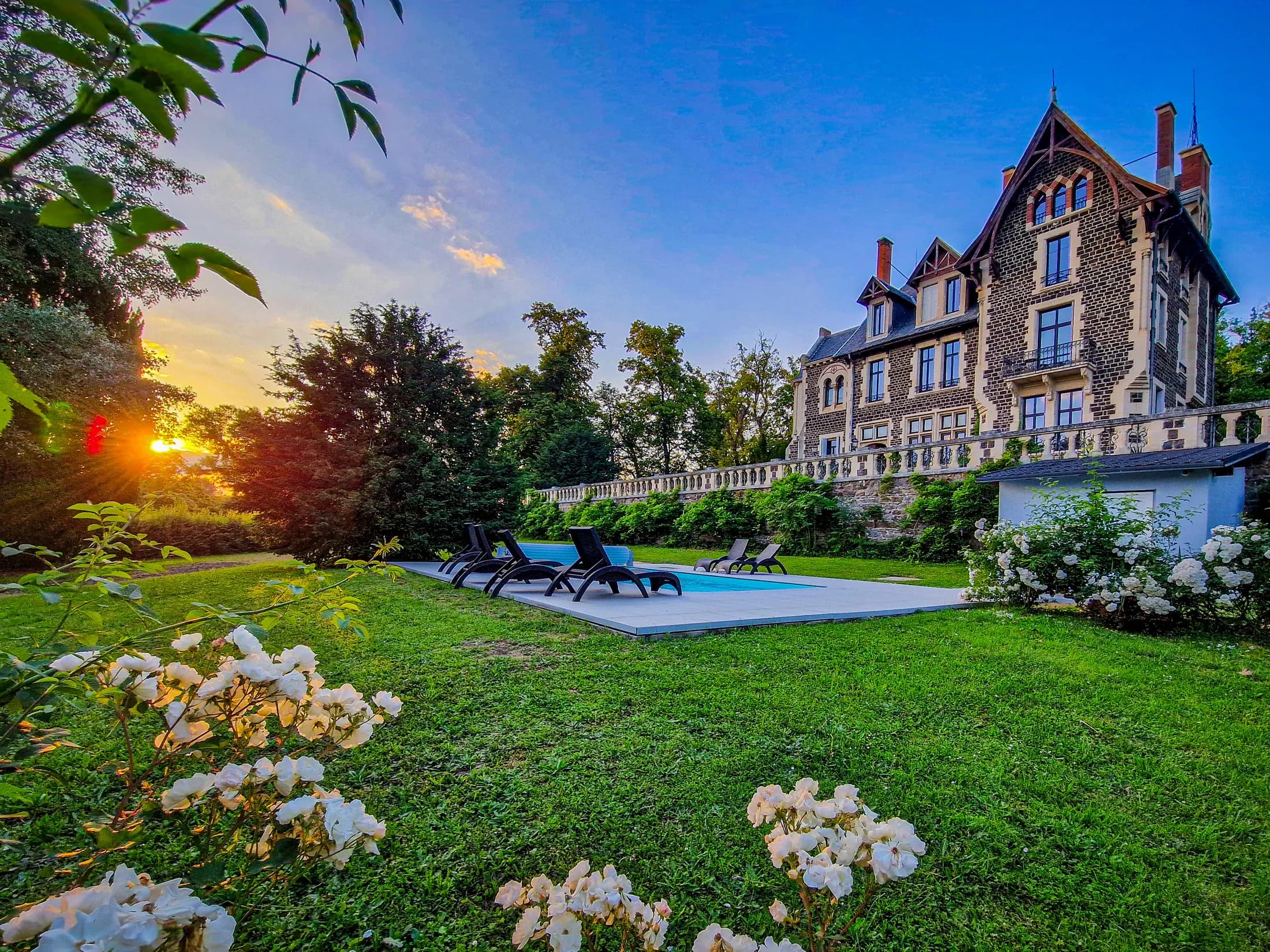
Two hectares of grounds, a heated pool, alpacas in the meadow, and nine rooms that have become artworks.
The house has kept its proportions, its mouldings and its stone. It has simply stopped being silent.
Two hectares, and time slowing down
The grounds wrap around the house on every side. They began as a private pleasure garden, laid out for walking and for shade: the great trees date from that time, and they stood here long before us and will stand here after.
Today you will find the alpacas, the pool, paths that lead nowhere in particular, and that late-afternoon light that keeps everyone outside until they really have to come in.
The virtual tour
Walk through the manor room by room, at your own pace: the hall, the sitting rooms, the bedrooms, the terrace. The best way to get a feel for the place before you come.
Come and seefor yourself
there are still nights to be had
Availability and rates are shown live. All you need is a date.